

Mosquito Mesh Options for uPVC Windows: What Should You Choose?
Mosquito mesh can make it easier to ventilate your home while keeping insects out, but the right option depends on your window design, available space and cleaning needs. Compare common mesh systems before ordering.
In a warm climate such as Chennai, opening a window brings fresh air into a room, but it can also let mosquitoes and other insects inside. A suitable mosquito mesh creates a barrier while letting air pass through. The important part is choosing a screen that fits the window design and is practical to use every day.
Not every mesh system works with every window. A screen that is convenient for a large sliding opening may not be the best option for a compact casement window. The frame, track, opening direction, available clearance, cleaning access and frequency of use all affect the choice.
This guide explains the main mosquito mesh options, what to discuss with your uPVC window supplier and how to avoid common ordering mistakes.
Quick comparison: common mosquito mesh systems
| Mesh system | Often considered for | Points to check |
|---|---|---|
| Sliding mesh shutter | Compatible sliding window or door configurations | Track space, movement, overlap, cleaning and locking access |
| Pleated or retractable mesh | Larger openings where a screen can fold or retract to one side | Clear opening width, fold stack, operating handle, track cleanliness and service |
| Hinged mesh shutter | Openings where a separate screen can swing on hinges, if compatible | Swing clearance, hinge position, latch and access |
| Fixed mesh panel | Openings that do not need the screen to slide or swing regularly | How the panel is removed for cleaning and whether it blocks access |
| Integrated or system-specific screen | Window systems designed to accept a compatible screen arrangement | Compatibility with the exact profile and window configuration |
These are general categories. Product availability and compatibility vary by manufacturer, window system, size and opening type, so ask the supplier to confirm the options that can actually be made for your window.
1. Start with the window type
Before selecting a mesh, identify the window or door system. The mesh needs to fit the opening without interfering with the sash, handle, locks, drainage or normal operation.
Sliding windows
A sliding mesh shutter may work with compatible sliding-window arrangements. It moves along a track and can be positioned to cover the opening used for ventilation. Ask the supplier:
- Is a separate mesh track included in this design?
- Can the mesh move smoothly through the full usable opening?
- Will the mesh overlap the opening sufficiently when closed?
- Can the glass shutters and mesh be operated independently?
- How should the track be cleaned?
- Does the mesh arrangement interfere with the lock or handle?
A sliding screen does not necessarily cover every part of a multi-track window at once. Ask the supplier to demonstrate how the actual configuration works.
Casement windows
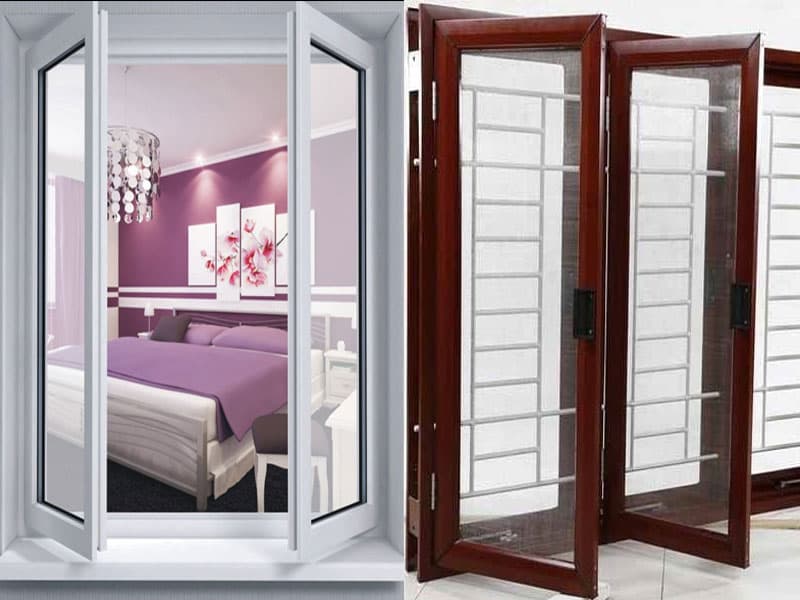
Casement windows open on hinges, so the mesh must suit the direction and movement of the sash. Depending on the system, a hinged, fixed or retractable screen may be possible.
Check whether the screen can be removed or opened for cleaning and maintenance, and whether it interferes with the handle or sash movement. Do not assume a sliding screen can be added to every casement window without a compatible frame arrangement.
Large openings and doors
Large balcony or patio openings may need a different screen design from a small bedroom window. Pleated or retractable systems can be considered where the product is compatible and there is enough space for the screen to fold or retract.
Ask to see the proposed system at a similar size, if possible. Confirm the maximum supported dimensions, operating method, service requirements and any limitations in writing.
Mesh options with Sunlight windows
Our uPVC sliding windows are offered with mosquito mesh options. Balcony enclosures can include integrated sliding mesh panels or pleated retractable mesh, and we also fit pleated mesh on slide and fold doors and villa windows. Tilt and turn windows can take an insect screen on the outer frame. Which option suits a given opening still depends on its size and design, so confirm it for each window.
2. Sliding mesh: a practical option for compatible sliders
A sliding mesh shutter travels along a track, so you can open the glass sash and position the screen over the ventilation opening.
Potential advantages
- Familiar sliding operation
- The screen does not need a large swing arc
- It can be convenient for regular daily use
- It may suit compatible sliding window designs
What to consider
The mesh shutter needs enough track space and must align properly with the opening. Dirt can collect in tracks, so the design should allow practical cleaning. Rollers, guides and handles may need periodic inspection.
Ask whether the mesh is included in the base quotation or priced separately, and whether the quote covers the mesh frame, screen material, rollers, handles and installation.
3. Pleated or retractable mesh: when the screen needs to fold away
Pleated mesh folds into a compact stack when opened and extends across the opening when closed. Depending on the system, it may suit larger doorways or openings where a screen that stays across the full width would be inconvenient.
Potential advantages
- The screen can retract when not needed
- It may suit some wider openings
- It can preserve a more open view when retracted
What to consider
A pleated system has tracks and moving parts that need to stay clean. Its fold stack takes up some space at the side of the opening. Operation, durability and supported sizes depend on the actual product and installation.
Ask the supplier to demonstrate how the screen opens and closes, how it is secured in the closed position and how the mesh and tracks are cleaned. Request the manufacturer's maintenance guidance and warranty terms.
4. Fixed and hinged mesh panels
A fixed screen stays in one position and may suit an opening that does not need frequent screen movement. A hinged screen swings open and closed where there is enough clearance and the window system supports it.
These can be simple options in the right situation, but access for cleaning matters. A screen that cannot be reached safely from inside or outside may become hard to maintain. Before choosing one, confirm:
- How the screen is removed or opened
- Whether cleaning access is safe
- Whether the panel interferes with the window sash
- How the screen closes and stays in position
- Whether pets, children or frequent use create additional requirements
5. What is the mesh made from?
The mesh material affects visibility, airflow, cleaning and resistance to wear. The best option depends on the specific product and conditions rather than one material name alone.
Ask the supplier to identify the screen material and provide its care instructions. If the home is close to the coast, exposed to strong sun or cleaned often, mention those conditions and ask whether the proposed material and frame finish are suitable.
Mesh openness and airflow
A tighter mesh may make it harder for small insects to pass through, but it can also affect airflow and visibility. A more open mesh may feel less restrictive but may not provide the same barrier against smaller insects.
Ask what insect sizes the screen is designed to exclude, if that matters for your home. Avoid claims such as "blocks every insect" unless the manufacturer provides evidence for the exact mesh specification.
Visibility and appearance
Mesh colour, strand thickness and openness affect how clearly you see through the screen. If appearance matters, ask to view a sample against a bright outdoor background and from your normal seating position inside the room.
Durability and cleaning
Mesh collects dust, pollen and other debris. The right cleaning method depends on the material and frame. Ask whether the screen can be removed and whether a soft brush, cloth or gentle rinse is recommended. Do not use harsh chemicals or high-pressure cleaning unless the manufacturer says it is safe.
6. Does mosquito mesh reduce ventilation?
Any screen adds some resistance to airflow. How noticeable that is depends on the mesh openness, screen area, wind conditions, window opening and the surrounding building layout.
If ventilation is a priority, ask the supplier to explain the trade-off between insect protection, visibility and airflow. A screen covers only the usable opening, so the size and position of the opening matter too. Do not assume a mesh preserves a fixed percentage of airflow unless there is test data for that exact product and configuration.
7. How to choose mesh for each room
Bedrooms
Consider how often the window is opened at night, whether the screen can be operated from inside and whether it can be cleaned easily. If the bedroom faces a busy road, remember that ordinary insect mesh is not an acoustic seal and will not give the noise reduction of a closed, properly sealed window. See our bedroom window solutions for options.
Kitchens
Cooking areas collect grease as well as dust, so choose a system that can be cleaned safely and regularly. Check whether the screen affects access to an exhaust outlet or any other required ventilation opening. Our kitchen window solutions cover ventilators and exhaust cutouts.
Bathrooms
Privacy and moisture exposure may be important. Confirm that the proposed screen and frame suit the conditions and that the arrangement works with the window's opening direction.
Balconies and large doors
Consider how people move through the opening, how often the screen is used and where a retractable or sliding panel will sit when open. Confirm that the mesh does not obstruct the door's locking system or safe operation.
Children's rooms and pet-access areas
Ask about secure latching, operating height and the product's limitations. Insect mesh should not be relied on to stop a child or pet from falling through an opening; use safety measures designed for that purpose.
8. What affects the price of mosquito mesh?
There is no single price that applies to every mesh installation. The final cost depends on the size of the opening, system type, screen material, frame arrangement, hardware, quantity, access and installation scope.
When requesting a quotation, ask for the mesh to be listed separately where possible, and check whether the price includes:
- Screen material and frame
- Rollers, hinges, handles or other operating hardware
- Tracks or guides
- Installation and adjustment
- Removal of an existing screen, if applicable
- Any special access or site work
- Warranty and service terms
Compare quotations for the same opening sizes and mesh system: a fixed panel, sliding shutter and pleated retractable screen are not like-for-like alternatives. Do not rely only on a price per square foot if the quotes exclude different hardware or installation work. Our guide to uPVC window prices in Chennai covers reading a quotation in more detail.
9. How to maintain mosquito mesh
Routine care keeps a screen easier to operate and more pleasant to look through.
- 1Remove loose dust gently, with a soft brush or the cleaning method the manufacturer recommends.
- 2Clean the tracks or guides, removing dust and debris that can obstruct sliding or retracting movement.
- 3Avoid force: if the screen jams, check for visible obstructions rather than pulling harder.
- 4Inspect the mesh for tears, loose edges or damaged frame parts.
- 5Check the moving hardware, and ask for service if rollers, hinges, handles or guides become loose or damaged.
- 6Follow product-specific instructions, and avoid solvents, abrasive brushes and high-pressure water unless the manufacturer approves them.
If the screen is installed at a height where external cleaning is unsafe, do not lean out of the window; arrange safe access or professional service. Our maintenance guidelines and year-round care calendar include mesh checks alongside the rest of the window.
10. Questions to ask before ordering
Use this checklist when discussing mesh with your uPVC window supplier:
- Which mesh systems are compatible with my exact window design?
- Is the mesh included in the quotation or priced separately?
- What material and mesh specification are being supplied?
- How much of the window opening will the screen cover?
- Can the screen and glass sash operate independently?
- Will the mesh interfere with handles, locks, drainage or access?
- How can the screen be removed or cleaned?
- What maintenance do the tracks and moving parts need?
- What are the supported dimensions and any system limitations?
- What warranty and service terms apply to the mesh and hardware?
- Is installation included, and are there any extra site charges?
- Is the screen suitable for the room's exposure and expected use?
Ask the supplier to show the actual proposed configuration or a representative sample before approving the order. If you are adding mesh to windows you already have, the opening will need to be checked first; our guide to what happens during a site measurement explains that visit.
Frequently Asked Questions
Short answers to the questions homeowners ask most often about mosquito mesh for uPVC windows.
No. Compatibility depends on the profile system, window type, opening dimensions, available track or frame space and the proposed screen. Ask the supplier to confirm a compatible solution for each opening.
Neither is universally better. Sliding mesh may suit compatible sliding windows, while pleated mesh may be useful for some wider openings where retracting the screen is convenient. Compare the actual system, space, operation, maintenance and price.
That depends on the mesh specification and the insects involved. Ask the supplier for the intended use and relevant product information. No generic screen should be assumed to exclude every insect in all conditions.
A screen adds resistance to airflow, and the effect depends on mesh openness, opening size and conditions. Ask for the proposed mesh specification if airflow is a major priority.
Sometimes, but it depends on the existing window design, available space and compatible screen systems. A supplier should inspect the window and confirm the practical options before promising a retrofit.
There is no single schedule for every home. Dust exposure, nearby roads, trees, cooking and the screen material all affect how quickly it gets dirty. Inspect it regularly and follow the manufacturer's cleaning guidance.
No. Ordinary insect mesh is designed as an insect barrier, not to prevent falls or provide security. Use a properly designed safety barrier or security solution where needed.
Discuss it before the window design is finalised. Planning the screen with the window makes compatibility, operation and cost clearer than trying to add an unsuitable system later.
Conclusion: choose mesh as part of the window design
The right mosquito mesh suits the window, covers the intended opening, operates comfortably and is practical to clean. Start by identifying the window type, then compare compatible sliding, pleated, hinged or fixed options. Ask about the mesh material, airflow, supported dimensions, maintenance, installation and warranty.
Before approving the order, make sure the screen arrangement is listed in the quotation and does not interfere with normal window operation or safety requirements.
Planning uPVC windows or mosquito mesh for your Chennai home?
Contact Sunlight uPVC Windows to discuss your window design and ask which screen options are compatible with your openings.
Tell us which rooms you open most, how wide the openings are and whether you prefer a screen that slides, folds away or stays fixed.
Planning mesh with the window order makes compatibility and cost clearer from the start.
- Phone+91 98418 19576
- ShowroomSR Plaza, 2nd Floor, No. 96, Velachery Main Road, Sembakkam, Chennai 600 073
- FactoryPlot No. 41/42, Premier Avenue, Keelpadappai, Padappai, Chennai 601 301
Have a question this article did not cover? Get in touch — we will get back within a working day.
Continue reading
 Maintenance
uPVC Window Maintenance Through the Year
uPVC windows are low maintenance, not no maintenance. Here is the simple annual schedule we recommend to keep windows performing through their full warranty life.
Read article Buying Guide
How to Compare uPVC Window Profiles, Steel Reinforcement, Glass and Hardware
Two uPVC window quotations can look similar while specifying different materials and components. Learn how to compare profiles, reinforcement, glass, hardware, seals and installation details before choosing a supplier.
Read article Buying Guide
uPVC Window Prices in Chennai: What Determines the Final Quote?
Understand what affects uPVC window prices in Chennai, from dimensions and profiles to glass, hardware, mesh and installation. Learn what to compare in a quotation.
Read article