
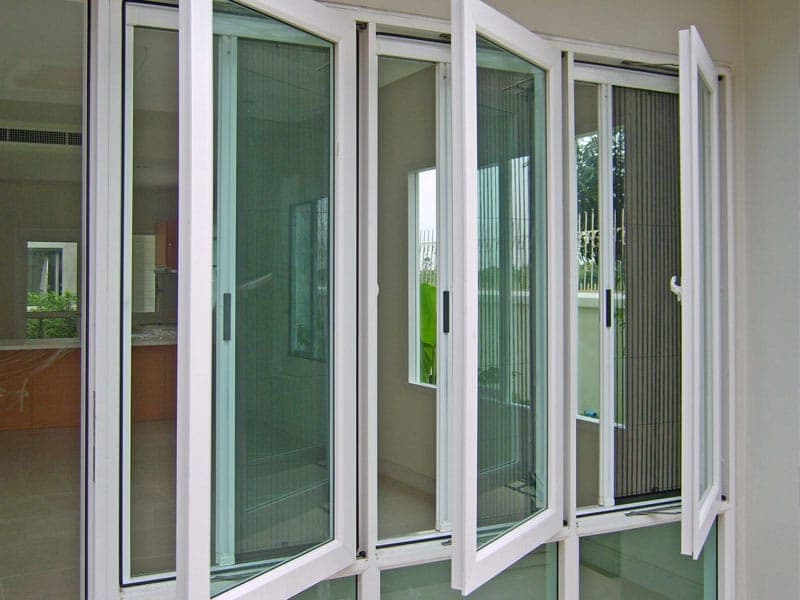
uPVC vs Aluminium Windows for Chennai Homes: Which Should You Choose?
Compare uPVC and aluminium windows for Chennai homes, including insulation, design, maintenance, coastal exposure and cost. Learn what to compare before requesting a quote.
Choosing windows for a home is about more than appearance. The frame material affects the design, glass area, comfort, maintenance and overall project cost. In Chennai, homeowners may also need to consider heat, humidity, heavy rain, coastal exposure and noise from busy roads.
Two common choices are uPVC windows and aluminium windows. Both can be suitable for residential projects, but they have different characteristics. The right option depends on the opening size, desired appearance, glass and hardware specifications, site conditions and budget.
In this guide, we compare uPVC and aluminium windows in practical terms so you can ask better questions and compare quotations fairly.
Quick answer: uPVC or aluminium?
There is no single winner for every home.
- Consider uPVC if you want a low-maintenance frame system and are comparing standard residential window designs with thermal comfort in mind.
- Consider aluminium if slim sightlines, a larger glass area, particular architectural finishes or large openings are priorities.
- Compare complete window systems, not just the material name. Profile design, glass, seals, hardware, reinforcement, fabrication and installation all affect performance.
For many projects, the best decision starts with the actual opening and the requirements of the room, not a blanket claim that one material is always better.
uPVC and aluminium: what is the difference?
uPVC stands for unplasticised polyvinyl chloride. It is a rigid polymer used to make window and door frames. uPVC window systems generally use hollow profile sections, with reinforcement where required by the system and design.
Aluminium windows use metal profiles. Aluminium's strength can allow slimmer frame sections and a larger visible glass area in suitable systems. Some aluminium systems include a thermal break designed to reduce heat transfer through the frame.
The two materials should not be compared as if every system were identical. A basic aluminium window, a thermally broken aluminium system and a high-specification uPVC system may have very different specifications and prices.
uPVC vs aluminium: comparison table
| Factor | uPVC windows | Aluminium windows |
|---|---|---|
| Frame appearance | Frames are often visually wider, depending on the profile system. | Can offer slimmer sightlines and more visible glass, depending on the system. |
| Thermal performance | Multi-chamber profiles can reduce heat transfer through the frame. Whole-window performance still depends on glass, seals and installation. | Aluminium conducts heat; a thermal-break system can reduce transfer through the frame. |
| Opening sizes | Suitable for many standard residential designs when correctly specified. | Strength-to-weight characteristics can be useful for larger openings and slim-frame designs. |
| Maintenance | Usually needs routine cleaning and periodic inspection of seals and hardware. | Also needs routine cleaning and inspection; coating and hardware should be checked, particularly in exposed environments. |
| Finish options | Depends on the profile range; may include white and selected coloured or wood-effect finishes. | Often offers a broad range of powder-coated or anodised finishes, depending on the system. |
| Moisture and corrosion | The uPVC frame itself does not rust, but hardware, reinforcement and other components still need suitable specifications. | Aluminium does not rust like iron, but surface coatings, hardware and dissimilar-metal interfaces need appropriate care, especially near the coast. |
| Glass options | Depends on the system and glazing design. | Depends on the system and glazing design. |
| Cost | May be cost-effective for many standard residential configurations, but price varies by specification. | Cost varies widely; basic and premium systems can have very different prices. |
| Best comparison method | Compare profile, reinforcement, glass, hardware, installation and warranty. | Compare profile series, thermal-break details if applicable, glass, hardware, finish and installation. |
1. Thermal comfort in Chennai
Chennai has a hot, humid climate, so heat entering through windows can be an important consideration. Frame material is one part of the overall performance; the glass, frame design, weather seals, shading, orientation and installation also matter.
uPVC is a relatively low-conductivity material, and multi-chamber profiles can help reduce heat transfer through the frame. Conventional aluminium conducts heat more readily, while thermally broken aluminium systems are designed to reduce that transfer.
When comparing options, ask for the performance information available for the specific window system and glass combination. Do not assume that all uPVC windows have identical thermal performance or that all aluminium windows perform poorly. Our guide to what a U-value tells you explains how to read those figures.
Questions to ask:
- What glass specification is included?
- Is the aluminium system thermally broken, if applicable?
- What information is available about the complete window's thermal performance?
- Can external shading or another design change reduce direct solar gain?
- Does the installation include appropriate sealing around the frame?
2. Noise reduction: which is better?
If your home faces a busy road, a school, a commercial street or another noisy area, sound reduction may be a major priority.
Neither uPVC nor aluminium alone guarantees a particular noise-reduction result. The outcome depends on the entire window assembly, including glass type and thickness, gaps, seals, frame design and the quality of installation. A well-specified window with suitable glazing and a properly sealed installation can perform better than a poorly fitted window made from either material.
Before deciding, explain the noise problem to the supplier. Ask which glazing and sealing options are suitable and whether performance information or a comparable installation example is available. Our article on how double glazing reduces traffic noise covers the glazing side in more detail.
3. Appearance and visible glass area
Aluminium systems can provide slim frame profiles, which may suit contemporary homes, large glazed openings and designs where maximising visible glass is important.
uPVC profiles are often bulkier, although the exact appearance depends on the profile series and configuration. Available colours and finishes also vary between manufacturers. Think about the overall design rather than comparing a single profile sample:
- How much visible frame will there be?
- Does the frame colour suit the interior and exterior?
- How many panels are needed?
- Will the window be viewed from the street, balcony or garden?
- Does the opening require a particular architectural appearance?
Ask to see samples or photographs of the actual system being quoted.
4. Strength and large openings
Aluminium's strength-to-weight characteristics can make it useful for large glass panels and slim-frame designs. uPVC can also be used for a range of window sizes, but the suitability of a particular configuration depends on the profile system, reinforcement requirements, hardware, glass weight and design limits.
For a large living-room opening, balcony door or high-rise installation, do not rely on the material name alone. The supplier should confirm that the proposed system is suitable for the opening and site conditions. For large uPVC openings, see our villa windows and slide and fold doors.
Ask for the proposed configuration and component specifications in writing. Where engineering or building requirements apply, make sure they are addressed by the responsible professional.
5. Maintenance and long-term care
Both materials need routine care. Neither should be treated as completely maintenance-free.
For uPVC windows
- Clean frames with products recommended by the system supplier.
- Keep tracks and drainage paths clear.
- Inspect seals, handles, locks and rollers periodically.
- Avoid harsh chemicals or abrasive tools unless the manufacturer confirms they are suitable.
For aluminium windows
- Clean the frame and glass according to the finish manufacturer's guidance.
- Inspect powder-coated or anodised surfaces for damage.
- Check seals, drainage paths, handles, locks and rollers.
- Pay particular attention to exposed locations where salt, pollutants or standing moisture may affect components.
Maintenance requirements vary with the product, finish, location and use. Ask the supplier for written care instructions and warranty conditions. For uPVC, our maintenance guidelines and year-round care calendar set out the routine.
6. Chennai's humidity and coastal exposure
Some Chennai properties are close to the coast and may experience salt-laden air. Other homes are further inland and face different exposure. The correct specification depends on the actual site.
The uPVC frame itself does not rust, but the complete window includes hardware, reinforcement, fasteners and other components. These should be suitable for the environment and installed correctly. Aluminium also needs a suitable finish and appropriate hardware for the exposure conditions. Coating quality, damage, component compatibility and maintenance can affect long-term performance.
Tell the supplier the project locality and whether the windows are exposed to coastal air, strong wind or driving rain. Ask what material, finish and hardware specifications are recommended for that site and why. Our guide to uPVC windows in coastal climates lists what to check.
7. Which option costs less?
There is no reliable single price that applies to every uPVC or aluminium window. Costs vary by profile series, opening dimensions, configuration, glass, hardware, finish, reinforcement, mesh, fabrication, installation and project requirements.
A basic system in one material may cost less than a premium system in the other. A comparison is meaningful only when the quotations describe equivalent requirements.
| Cost item | What to compare |
|---|---|
| Frame system | Brand, series, dimensions, finish and configuration. |
| Glass | Type, thickness, safety requirements and glazing build-up. |
| Hardware | Handles, hinges, rollers, locks and other fittings. |
| Reinforcement or thermal break | Applicable system details and specifications. |
| Mesh | Whether it is included and what type is supplied. |
| Delivery and installation | Whether included, and any exclusions or conditions. |
| Removal and finishing | Removal of old frames, civil repairs, sealing, repainting and cleanup. |
| Warranty | Coverage, duration, exclusions and service process. |
| Taxes and extra charges | Confirm what the final total includes. |
Avoid deciding on an advertised per-square-foot rate alone. Ask for an itemised quote based on your actual dimensions and requirements. Our guide to uPVC window prices in Chennai explains what drives the final figure.
8. Which is better for each room or project?
The most suitable choice depends on the project rather than a universal rule.
| Project requirement | What to consider |
|---|---|
| Standard bedroom windows | Compare thermal comfort, ventilation, glass, hardware and overall budget. |
| Living room with a large opening | Check panel size, structural suitability, visible frame width and glass options. |
| Balcony sliding doors | Compare the complete sliding system, rollers, locks, drainage, glass and installation requirements. |
| Home near a busy road | Focus on glazing, seals, frame design and installation quality for noise reduction. |
| Property near the coast | Discuss exposure, finishes, hardware and maintenance for the actual site. |
| Contemporary design with slim frames | Explore suitable aluminium systems and compare available uPVC designs. |
| Replacement project | Include removal, opening preparation, finishing and disposal in the quotation. |
| Project with a tight budget | Compare equivalent specifications and decide which features are essential. |
A mixed approach can also be considered: a homeowner may choose one system for standard windows and another for a large architectural opening. This requires checking the visual consistency, installation details and suitability of each system.
If you already have aluminium windows and are planning to change them, read what to expect when replacing aluminium windows with uPVC.
9. How to compare quotations fairly
Request quotations for the same opening schedule and comparable specifications. Give each supplier the same dimensions, window style, glass requirements, mesh preferences and installation scope. Use this checklist when comparing quotes:
| Quotation detail | Supplier A | Supplier B |
|---|---|---|
| Frame material and profile series | ||
| Window dimensions and quantity | ||
| Opening configuration | ||
| Glass type and thickness | ||
| Reinforcement or thermal-break details | ||
| Hardware and locking | ||
| Mesh and finish | ||
| Delivery and installation | ||
| Removal and finishing | ||
| Warranty and after-sales service | ||
| Taxes and additional charges | ||
| Final total |
If one quotation is cheaper, check whether it excludes glass upgrades, mesh, installation, finishing or other components. The lowest initial quote may not be the lowest total for the same scope.
10. Questions to ask before choosing a window supplier
Before placing an order, ask:
- 1Which exact profile system and series are included?
- 2What glass and hardware are specified?
- 3Is reinforcement or a thermal break included where required by the system?
- 4Who will measure the openings before production?
- 5What is included in delivery and installation?
- 6Are removal, sealing, civil repairs and finishing included?
- 7What written warranty applies to profiles, glass, hardware and installation?
- 8How are service requests handled after installation?
- 9Can the supplier show real examples of comparable completed projects?
- 10What is the final price for the complete, specified scope?
Written answers make it easier to compare suppliers and avoid misunderstandings later. If uPVC suits your project, browse our uPVC sliding windows and uPVC casement windows, or compare our Basic, Premium and Elite series.
Frequently Asked Questions
Short answers to the questions homeowners ask most often when choosing between uPVC and aluminium.
Not in every situation. uPVC can offer useful thermal-insulation and low-maintenance characteristics, while aluminium can suit slim-frame designs and larger openings. The right choice depends on the complete system, glass, installation, site exposure and budget.
No. Price varies by system, profile series, glass, hardware, finish, size and installation. Compare itemised quotations for equivalent specifications.
Neither material guarantees a particular result by itself. Glass specification, seals, frame design and installation are important. Ask for options suitable for your actual noise conditions.
The uPVC frame itself does not rust. However, hardware, reinforcement and fasteners are separate components and should be specified and maintained appropriately.
They can be, provided the system, finish, hardware and installation are suitable for the actual exposure. Ask the supplier about coating, component compatibility and maintenance.
No. Thermal breaks are a feature of particular systems. Ask the supplier to confirm whether the quoted aluminium system includes one.
Both need cleaning and periodic inspection. Maintenance requirements depend on the frame system, finish, hardware, exposure and the manufacturer's instructions.
You can use per-square-foot rates for an initial indication, but check what each rate includes. A fair final comparison uses the same opening sizes, design, glass, hardware and installation scope.
Explore uPVC window options with Sunlight
If you are considering uPVC windows for your Chennai home, compare the available designs and specifications before deciding.
Sunlight uPVC Windows makes windows and doors to measure with SAF Baydee and Prominance profiles. Our team can confirm the current profile, product and installation options for your project.
Need help comparing your options? Share your project location, approximate dimensions and preferred window styles with the Sunlight team to discuss the next steps.
- Phone+91 98418 19576
- Showroom and officeSR Plaza, 2nd Floor, No. 96, Velachery Main Road, Sembakkam, Chennai 600 073
- FactoryPlot 41/42, Premier Avenue, Keelpadappai, Padappai, Chennai 601 301
Have a question this article did not cover? Get in touch — we will get back within a working day.
Continue reading
 Renovation
Replacing Aluminum Windows with uPVC: What to Expect
Aluminium replacements are easier than wood replacements but come with their own quirks. Here is what changes about your home, your bills, and your install timeline.
Read article Buying Guide
uPVC Window Prices in Chennai: What Determines the Final Quote?
Understand what affects uPVC window prices in Chennai, from dimensions and profiles to glass, hardware, mesh and installation. Learn what to compare in a quotation.
Read article Technical
What U-Value Actually Tells You About a Window
U-value is the most misused spec in window catalogues. Here is what the number means, why a low U-value matters less in Chennai than in Delhi, and what you should look at instead.
Read article