
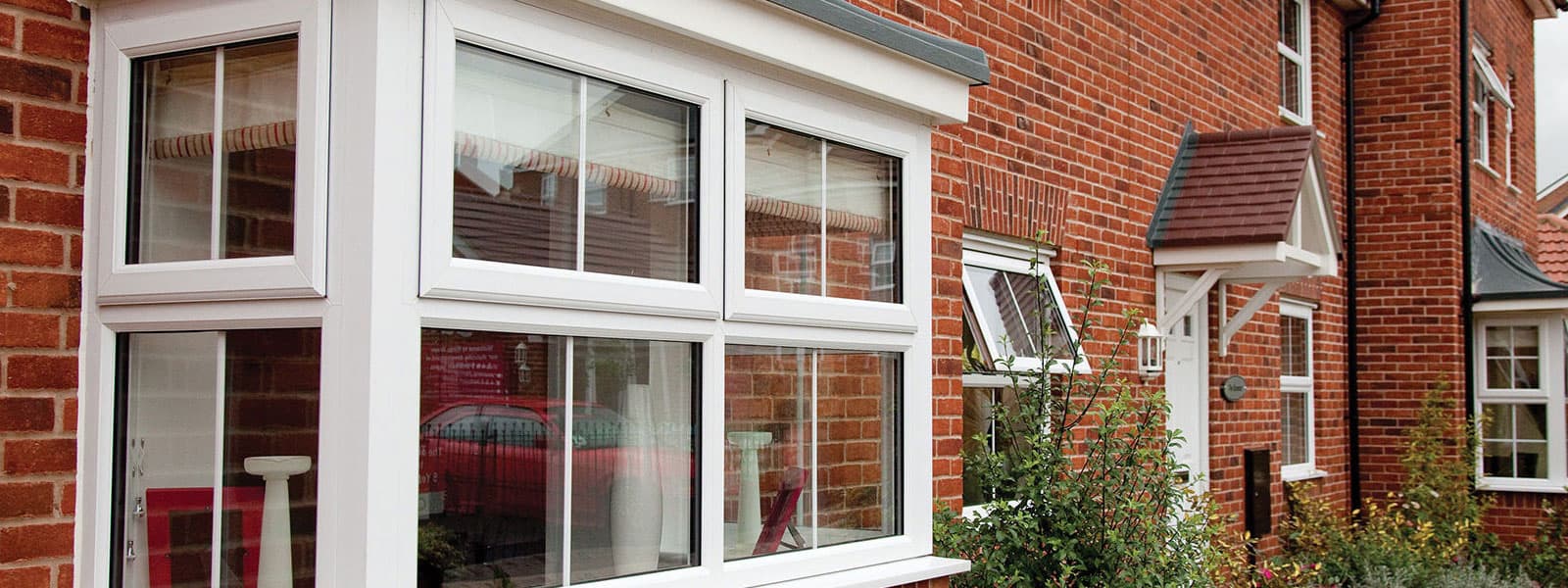
U-value is the most misused spec in window catalogues. Here is what the number means, why a low U-value matters less in Chennai than in Delhi, and what you should look at instead.
Every uPVC brochure in India quotes a U value. Most quotes either misuse it or quote a number that applies only to the glass, not the whole window. Here is the short version of what the number actually means and how to use it when comparing options.
What U-value measures
U value (W/m²K) measures how much heat passes through a square metre of window per degree of temperature difference between inside and outside. Lower is better. A typical single glazed window is around 5.0 W/m²K. A standard double glazed unit is around 2.7. A premium DGU with Low E coating and argon fill drops to about 1.3.
The unit comes apart cleanly. Watts per square metre of window area. Per degree of temperature difference. So if your window is 1.8 m² and the indoor outdoor temperature difference is 10°C, a U value of 2.7 W/m²K means 1.8 times 2.7 times 10 equals 49 watts of heat moving through that window continuously. Multiply by 24 hours and 30 days and you get the monthly heat load that has to be removed by air conditioning. This is how the energy savings calculations in window brochures work.
Glass U-value vs whole window U-value
The reason this matters: glass is usually the best insulating part of a modern window. The frame is worse, especially around the perimeter where the spacer between glass panes creates a small thermal bridge. So the glass U value flatters the assembly. When competing brochures both claim low numbers, ask for Uw on each and compare those.
Why U-value matters less in Chennai than in Delhi
Delhi summers run hot, winters cold. Indoor and outdoor temperatures differ by 15 to 20°C for half the year. U value matters because heat moves both ways through the window assembly. Chennai stays warm year round. The temperature delta is rarely more than 8 to 10°C even at peak summer, when the AC is on. A lower U value still helps, but the impact is smaller than in northern India.
An example. A 2 BHK Chennai apartment with 15 m² of glazing and a typical 8°C indoor outdoor difference, switching from Uw 2.7 to Uw 1.6, saves about 130 watts of heat load. Over a year of partial AC use, that is around 200 to 300 kWh, or 1500 to 2500 rupees on the electricity bill. The same upgrade in a Delhi house with 15°C delta saves twice that amount. So the same window costs the same but pays back faster up north.
What matters more in Chennai
Solar heat gain coefficient (SHGC) is the bigger lever for tropical climates. SHGC measures how much of the sun's radiant heat gets through the glass. Plain clear glass has SHGC around 0.85. Low E glass drops it to 0.35. That is a 40 to 50 percent reduction in heat coming in through the pane on a sunny afternoon, which has a bigger comfort and AC load impact than U value alone.
Why SHGC matters more in our climate: Chennai sun loads window facing surfaces with up to 800 watts per square metre of radiant heat at peak afternoon. That is far more than the conducted heat through any U value. So the window can have a moderate U value but very low SHGC and still keep the room cooler than a window with very low U value but high SHGC. Pick SHGC first, U value second, on west and south west elevations. North facing rooms get less direct sun so the priority flips back toward U value.
How to read a window spec sheet
- 1Look for Uw (whole window U value), not Ug (glass only)
- 2For Chennai, prioritise low SHGC on west and south west elevations
- 3Reasonable Uw for residential is 1.6 to 2.2 W/m²K. Below 1.6 you are paying for performance you will not feel
- 4If the brochure does not state Uw clearly, ask. The number exists, the marketing team often hides it
- 5Compare U values across brochures only if they are measured under the same standard (ISO 10077 is most common)
- 6Cross check the SHGC against the elevation. North or south of 0.4 is good. West facing should be 0.35 or lower
Real numbers from our installs
Some indicative whole window U values from products we install. These are Uw, not Ug, measured on a standard 1.23 by 1.48 metre reference window. Single glazed uPVC casement: around 4.6 W/m²K. Single glazed uPVC sliding: around 4.8. Standard 5+12+4 DGU casement: around 2.5. Same with Low E coating and argon fill: around 1.6. Same with laminated outer pane and Low E plus argon: around 1.5. Once you go below 1.5 you are getting into specifications that need triple glazing or vacuum glazing, both of which are expensive imports for residential.
For most Chennai homes, the practical sweet spot is 5+12+4 DGU with Low E coating on the outer pane and argon fill, giving Uw around 1.6. This is what we recommend as the default upgrade where customers want the thermal comfort improvement without paying for performance they will not feel.
Common mistakes when reading specs
- Comparing Ug from one brochure to Uw from another and concluding the first is better
- Ignoring SHGC and picking based on U value only for a tropical climate
- Assuming argon fill always helps. It does, but only if the gap is wide enough (12 mm minimum)
- Picking laminated glass for thermal performance. Lamination is a noise feature, not a thermal feature
- Assuming a low number on glass means a low number on the window. Frames matter
We covered the cost side of choosing glass spec in Single vs Double Glazing. For coastal Chennai specifically, coastal climate specs covers what we change in our standard build. And for noise specifically, lamination details are in How Double Glazing Reduces Traffic Noise.
Have a question this article did not cover? Get in touch — we will get back within a working day.
Continue reading
 Buying Guide
Single vs Double Glazing: When the Upgrade Pays Off
Double glazing costs about 35 to 45 percent more than single glazing on the same frame. Here is when it earns that money back, and when single glazing is genuinely fine.
Read article Technical
uPVC Windows in Coastal Climates: Why Chennai Needs Different Specs
Salt air, high humidity, monsoon downpours and 40°C summers put uPVC windows through more than what catalogue specs assume. Here is what we change in our standard build for coastal installations.
Read article Technical
How Double Glazing Reduces Traffic Noise: A Practical Guide
Why a single number on a brochure does not tell the full noise story, what dB reduction actually feels like in a Chennai bedroom, and why the seal does most of the work.
Read article