

Multi-Point Locking and What It Adds to Window Security
Most home break-ins through windows happen because of single point locks, not because the glass was forced. Here is how multi-point locking works and why it is worth the upgrade.
Most window break-ins in residential Chennai happen at the corners, not the middle. The intruder pries the sash away from the frame at one corner with a flat tool, the lock at the centre rotates open, and the window is in. Multi point locking is the hardware that prevents this. This post covers what the mechanism actually does, how it differs from a single point lock, and what to specify when you are placing a window order.
How multi-point locking works
A single point lock secures the sash to the frame at one location, usually the centre of the operating side. A multi point lock connects multiple locking points along the entire perimeter through a single handle. Turn the handle once, and bolts engage at the top, bottom, and sometimes the hinge side simultaneously.
On a casement window the typical layout is two locking points top and bottom plus the central handle. On a sliding window it is two or three locking points along the meeting stile. The user experience is identical to a single point lock. The mechanical resistance to forced entry is several times higher.
Internally the mechanism uses a steel gear box that rotates a continuous strip running the length of the sash. As the strip rotates it drives mushroom shaped studs into matching keepers on the frame. The mushroom geometry resists pull-out forces, so an intruder trying to pry the sash apart from the frame finds the studs holding firm at every point along the perimeter. Levering at one corner does not give them a moving target. The whole sash is locked to the whole frame.
Why this matters more than glass strength
Forensic data from residential break-ins in Chennai (from local police summaries we have seen on community newsletters) shows that the majority of forced entries through windows happen via lever attack on the sash, not by glass breakage. Windows that resist lever attack at the perimeter are statistically far less likely to be forced. Toughened glass adds a layer of safety but is not the primary defence. The lock is.
Hardware brands and what they actually deliver
Multi point locking is a category, not a single product. Within it there is a wide range of quality. Cheap multi point locks use stamped steel components that loosen within 3 to 5 years and start binding. Premium multi point locks (Kin Long, chugn, Roto, Maco) use precision machined components that operate smoothly for 15 plus years. The price difference between budget and premium hardware on a typical residential install is around 4 to 6 percent of total project cost.
The brands we use depend on the project tier. Basic series gets SAF hardware (decent, made in India, holds up). Premium series gets a mix of SAF and chugn. Elite series gets Kin Long throughout. The premium brands also offer features that the budget hardware does not, like child safe key locks, tilt before turn restrictors, and concealed shoot bolts.
What to ask for in a quote
- Multi point locks on every operating sash, including kitchens and bathrooms (intruders look for the easiest entry first)
- European hardware brands (Kin Long, chugn, Roto) on Premium and Elite installs. Budget hardware fails at the gear box within 5 to 7 years
- Stainless steel grade 304 or higher on coastal installs (covered in detail in coastal climate specs)
- Child safe key locks on bedroom and balcony doors if you have small children
- Anti lift devices on sliding sashes to prevent the sash being lifted off the track
- Mushroom cam keepers (not flat plate keepers) for genuine pull resistance
Layered security beyond the lock
Multi point locking handles the prying attack vector. It does not stop a determined intruder with time and tools. For ground floor or otherwise vulnerable openings, pair multi point locking with laminated glass (which holds together even when broken) and a security grille if your aesthetic allows it. Together they push break in attempts toward the harder, slower, louder approaches that intruders avoid.
Laminated glass
Laminated glass has a PVB plastic interlayer between two panes. When the glass breaks, the pieces stay attached to the interlayer. An intruder who breaks a laminated pane is left looking at a wall of bonded shards that they have to physically tear through. It is loud and slow, the opposite of what a break-in needs. We recommend laminated glass on all ground floor and stilt level windows for this reason.
Security grilles
Aesthetically polarising but functionally effective. A well designed grille (steel or aluminium, fitted into reveals) deters most opportunistic attempts. Modern designs are far less prison like than the heavy decorative grilles common in older Chennai homes. If you reject grilles for aesthetic reasons, laminated glass plus multi point locking on a casement window is the next best thing for a ground floor unit.
What multi-point locking does not solve
It does not stop intrusion through the door. It does not stop attacks that ignore the window entirely (drilled wall, cut grille, etc.). It does not protect against intrusion via service balconies that are themselves left unlocked. Window security is part of an overall picture, and the lock is one element. The good news is that the lock is the cheapest element to upgrade and it has the highest leverage for the cost. A 2 BHK install where you specify multi point locking everywhere costs 4 to 8 thousand rupees more than the same install with single point locks on internal facing windows. It is the highest return security upgrade available on a fenestration project.
On the sash motion side, casement windows are inherently more secure than sliding because the closed sash is pressed against the frame by the lock pressure, not held in place by track friction.
Have a question this article did not cover? Get in touch — we will get back within a working day.
Continue reading
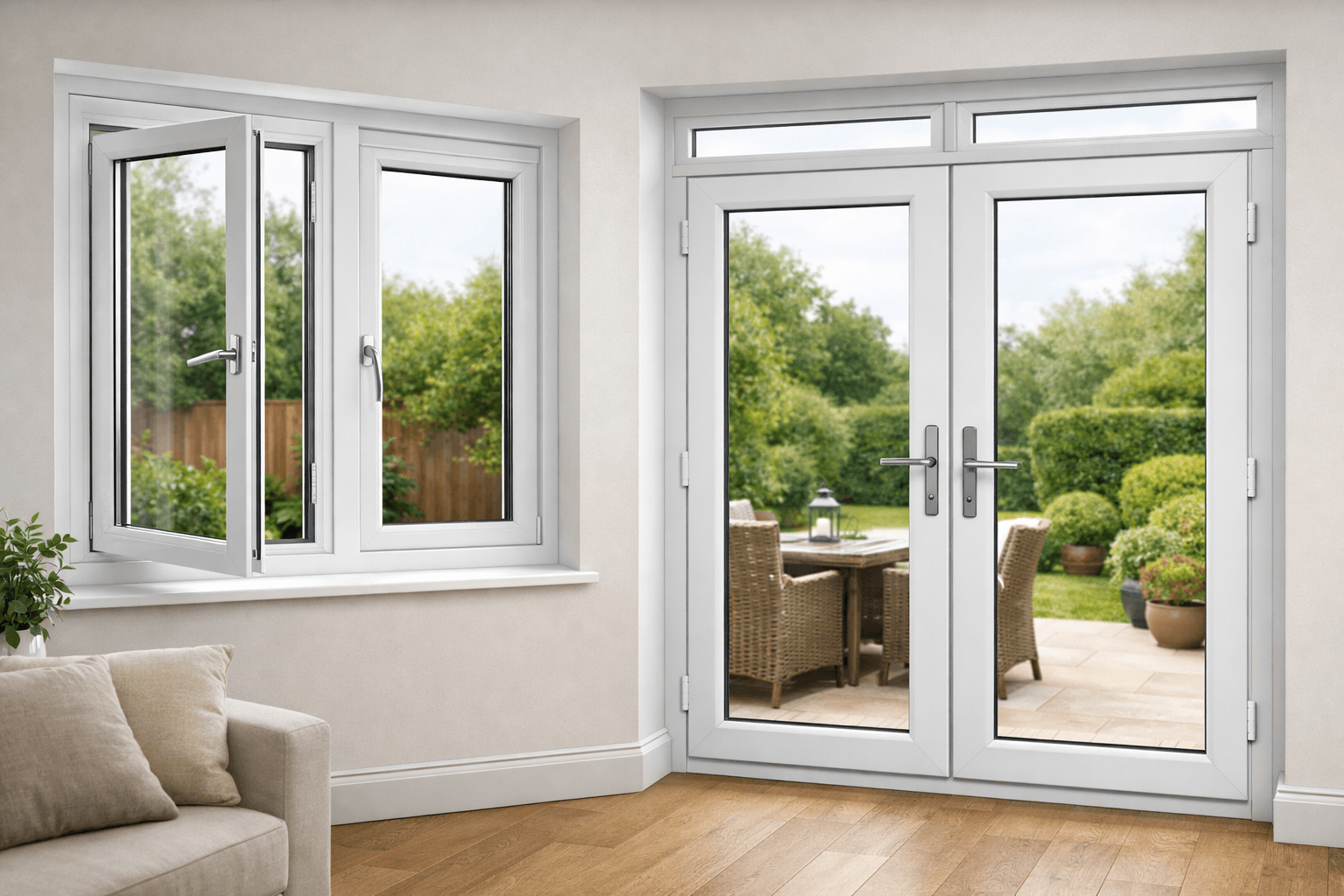 Buying Guide
Casement vs Sliding: Which uPVC Window Style Fits Your Chennai Home?
A practical comparison of the two most installed window styles in Chennai apartments and villas. How they open, where each one works, and the trade-offs nobody mentions on the showroom floor.
Read article Technical
uPVC Windows in Coastal Climates: Why Chennai Needs Different Specs
Salt air, high humidity, monsoon downpours and 40°C summers put uPVC windows through more than what catalogue specs assume. Here is what we change in our standard build for coastal installations.
Read article Technical
How Double Glazing Reduces Traffic Noise: A Practical Guide
Why a single number on a brochure does not tell the full noise story, what dB reduction actually feels like in a Chennai bedroom, and why the seal does most of the work.
Read article