
Casement vs Sliding: Which uPVC Window Style Fits Your Chennai Home?
A practical comparison of the two most installed window styles in Chennai apartments and villas. How they open, where each one works, and the trade-offs nobody mentions on the showroom floor.
Casement and sliding windows account for roughly 80 percent of the residential uPVC installations we do in Chennai. Customers usually walk into the showroom and ask which one is better. The honest answer is they are different tools for different openings, and the right choice depends entirely on what is on the other side of the wall, what the room is used for, and how you want the window to feel when you live with it. This guide walks through the real trade-offs based on roughly two thousand installations across Chennai apartments and villas over the last decade.
How they actually operate
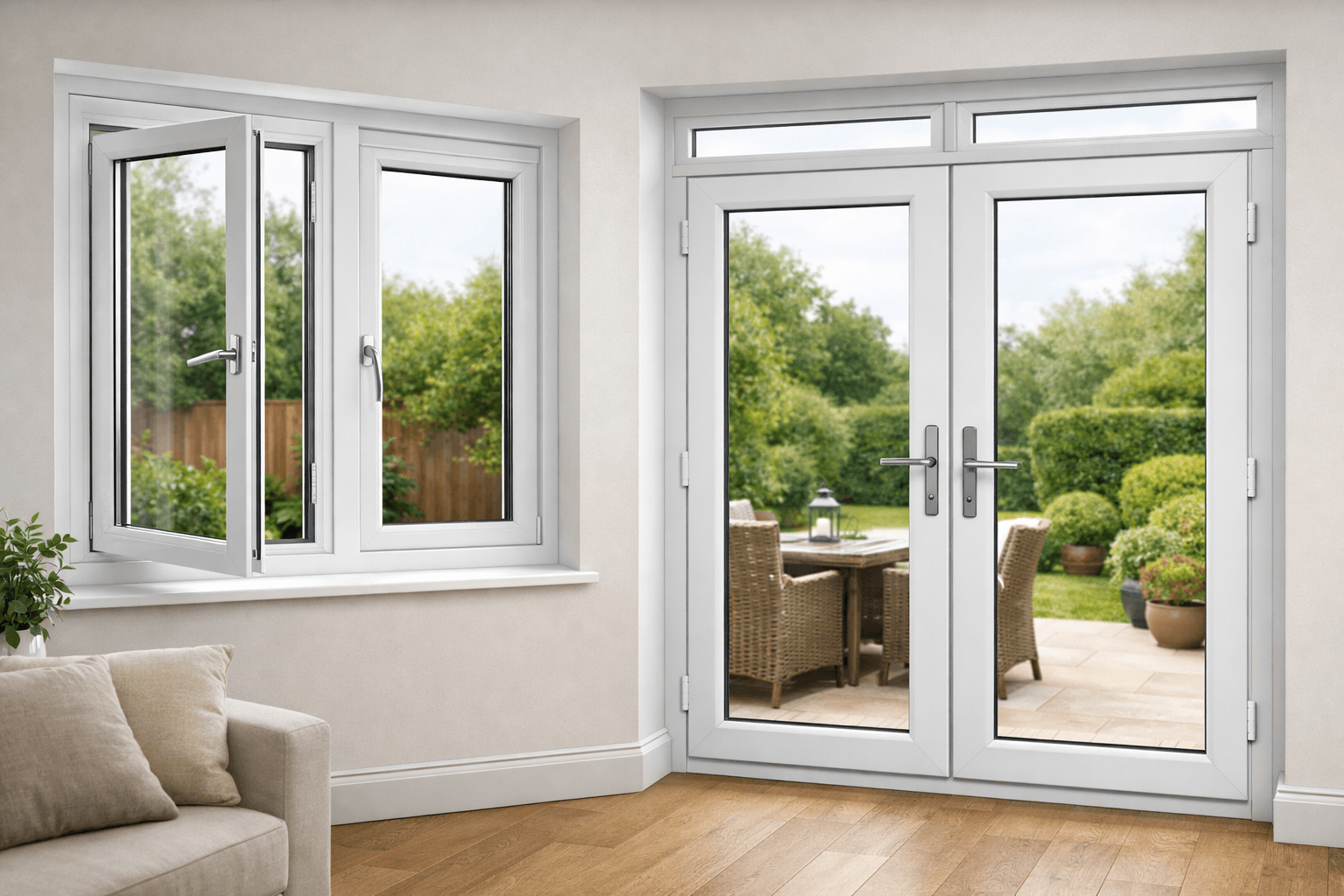
A casement window is hinged on the side and swings outward like a door. The full sash moves out of the opening, so when it is open the entire pane area becomes airflow. The sash is pressed back against the frame by a multi point lock when closed, which compresses an EPDM gasket all the way around the perimeter. That compression is what makes a closed casement effectively airtight.
A sliding window moves horizontally inside its own frame. The sash slides over a fixed pane on a track, so at most half the opening is ever clear at once. There is no compression seal. Instead the sash rides on rollers and the joint between sash and frame is sealed with brush strips and an EPDM lip seal that drags as the sash moves. This is a robust design but the seal is geometrically less tight than a compression seal.
That single mechanical difference is what drives most of the choice. Casement gives full opening and a tight seal. Sliding gives zero swing space and a wider sightline.
Where each one wins
Casement is the right choice for
- Bedroom and living room windows where you want maximum cross ventilation
- High floor apartments where wind seals matter more than space efficiency
- Openings with no obstruction outside (no AC outdoor units, no walkway)
- Anywhere acoustic insulation is critical. Compression seals beat track gaps every time
- Rooms facing a busy road where you want the window genuinely sealed when shut
- West facing rooms where afternoon heat ingress through a single sliding seal becomes uncomfortable
Sliding is the right choice for
- Kitchen windows above the sink or counter where a swinging sash collides with the workspace
- Balconies where outdoor space is shared with walkways or a neighbour's view
- Wide openings where you want to keep the sightline (sliding scales to 4 plus metres easily)
- Anywhere children might walk past the window. No swing means no head bump risk
- Apartments where the window opens onto a duct or service shaft and there is no space for an outward swing
- Bathrooms where you want a window that does not interfere with shower curtains, towel rails or wall-mounted accessories
The trade-offs nobody mentions
Cleaning and maintenance
Casement windows are harder to clean from inside on high floors because the outer face faces away from you. Most people end up either using a tilt and turn variant for cleaning access, or hiring an external cleaner once a year. Sliding windows can be lifted out of the track for cleaning, but the lift out itself takes some practice and one person should not attempt it on heavy double glazed sashes.
Maintenance differs too. Sliding tracks need to be kept dust free for smooth operation, especially in coastal Chennai where salt laden air carries grit. Casement hinges need lubrication once a year. Neither is a heavy maintenance burden, but the failure modes differ. If you are in a coastal pocket like Besant Nagar, ECR, or anywhere within 5 km of the sea, read uPVC Windows in Coastal Climates for the hardware specs that actually hold up over a decade.
Security characteristics
A closed casement window is mechanically more difficult to force open than a closed sliding window. The locks pull the sash tight against the frame at multiple points, so prying at any one location does not give an intruder leverage. Sliding windows can be lifted off the track in some designs. We use anti lift devices on all our sliders to address this, but the inherent geometry favours casement for security.
Wind load and large openings
On high floors with high wind exposure (above the 10th floor on most Chennai high rises, or directly facing the sea on ECR), casement windows perform better against wind pressure because the locking points distribute load across the perimeter. Large sliding windows on high floors can flex slightly in strong gusts which is normal but can be unsettling. For wind sensitive openings we usually recommend casement or fixed combinations rather than large sliders.
What about cost?
On a per square foot basis casement and sliding cost roughly the same in our standard specifications. The difference shows up in extras. Casement uses more hardware (multi point locks, hinges, handle assembly per sash) so high quality hardware adds more cost. Sliding uses simpler hardware but bigger glass panes per sash, so glass spec choices have more impact. In practice a typical residential install in either style ends up within 5 to 8 percent of the other for the same project.
What to actually pick
If your opening has no obstruction outside, casement gives you better thermal performance, better noise insulation, and full ventilation. If the opening sits above a counter, faces a walkway, or needs to span more than 2 metres in a single unit, sliding is the practical choice. Most Chennai homes end up with both. Casement in bedrooms and living rooms, sliding in kitchens and balconies. There is no rule that says a house must use one style throughout.
A quick decision matrix
- Bedroom on a quiet street: casement, single glazing is fine
- Bedroom on a main road: casement with laminated double glazing
- Living room with balcony access: sliding fold doors
- Kitchen above sink: sliding, two track
- Bathroom: ventilator with frosted glass
- Stairwell: fixed pane, no operation needed
- Pooja room or store room: ventilator only
- Villa entrance with view: large fixed pane plus smaller casement for ventilation
If you want a deeper read on the related decisions you will face after picking the style, we have separate pieces on glass specifications in Single vs Double Glazing, thermal performance in What U-Value Actually Tells You, and security hardware in Multi-Point Locking and Window Security.
Have a question this article did not cover? Get in touch — we will get back within a working day.
Continue reading
 Buying Guide
Single vs Double Glazing: When the Upgrade Pays Off
Double glazing costs about 35 to 45 percent more than single glazing on the same frame. Here is when it earns that money back, and when single glazing is genuinely fine.
Read article Technical
How Double Glazing Reduces Traffic Noise: A Practical Guide
Why a single number on a brochure does not tell the full noise story, what dB reduction actually feels like in a Chennai bedroom, and why the seal does most of the work.
Read article Technical
What U-Value Actually Tells You About a Window
U-value is the most misused spec in window catalogues. Here is what the number means, why a low U-value matters less in Chennai than in Delhi, and what you should look at instead.
Read article